How to Handle Crying While Officiating a Wedding (Yours or Theirs)
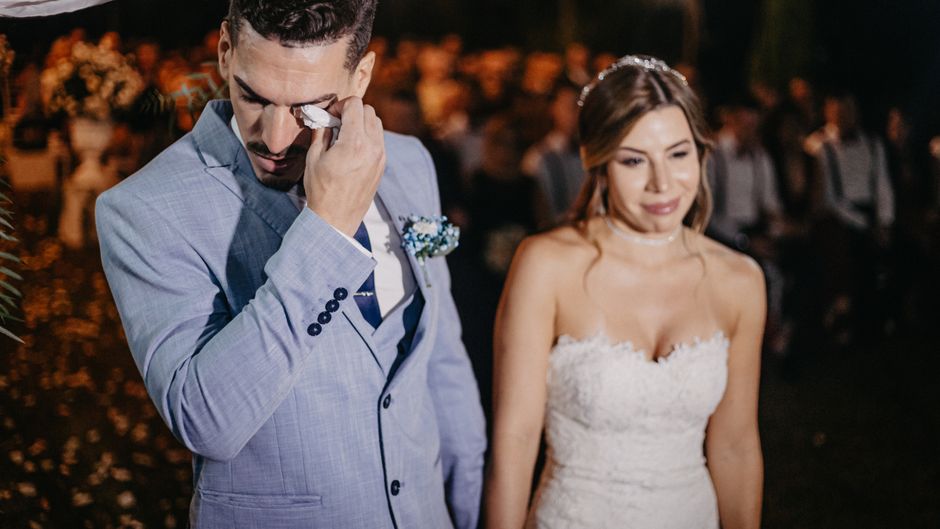
Weddings are one of the few settings where crying isn’t just accepted — it’s often expected, sometimes even hoped for. But when it happens in the middle of a ceremony you’re responsible for running, it can catch first-time officiants off guard. Here’s how to handle it, whether the tears are the couple’s or your own.
Why this happens more than people expect
Officiating puts you in an unusual position: you’re standing close to two people during one of the most emotionally significant moments of their lives, often reading words about their relationship that you wrote yourself after hearing their real story. It would be more surprising if nobody got emotional than if someone did. Understanding that this is normal — not a sign that something has gone wrong — is the first step to handling it well.
If the couple starts crying
During your reflection or the love story section. This is actually a good sign — it usually means the details you chose are landing exactly as intended. Keep going at a slightly slower pace, but don’t stop unless it’s clearly needed.
During their vows. If one partner is reading personal vows and starts to lose composure, a brief pause is completely normal and expected. You don’t need to fill the silence — let it sit for a few seconds. If they seem to need help continuing, a quiet, warm prompt like “take your time” is usually enough. Guests are rooting for the couple to get through it, not judging the pause.
During the declaration of intent. If someone’s “I do” comes out shaky or delayed because they’re emotional, that’s not a problem to solve — it’s part of the moment. Continue naturally once they’ve answered.
If you, the officiant, get emotional
This is more common than most first-timers expect, especially if you’re close to the couple and have personal history with them. A few practical strategies:
Build in a breath before the parts you know might hit you. If you know a particular line or story is likely to affect you, mark your script with a small pause cue beforehand so you’re not caught off guard mid-sentence.
Keep a tissue within reach, tucked into your script folder or a pocket, so you’re not searching for one in the moment.
Practice the emotional sections out loud in advance — not just reading them silently. Saying difficult lines aloud during rehearsal, even alone, often “burns off” some of the emotional intensity so you have more control on the actual day.
If your voice catches, pause and breathe rather than pushing through. A two-second pause to collect yourself reads as sincere, not unprofessional. Trying to talk through a shaking voice usually sounds more strained than a clean pause does.
What guests actually experience
It’s worth remembering that from the audience’s perspective, an officiant who tears up while reading about how much two people love each other doesn’t look unprofessional — it looks like someone who genuinely cares about the couple, which is exactly why they were asked to officiate in the first place. The moments officiants worry will look like a loss of control are often the moments guests remember most fondly afterward.
A practical checklist for emotional moments
- Keep tissues accessible for yourself and the couple
- Mark your script ahead of time at points you expect to be emotional
- Practice difficult sections out loud, not just silently
- When emotion hits, pause and breathe rather than rushing through
- Remember that a brief, genuine pause is never a mistake — guests read it as sincerity, not a stumble
If you want one less thing to manage on the day
Working from a fully written, rehearsed script — rather than trying to speak from memory or loose notes — gives you one less thing to manage if emotions run high, since you can always find your place again even through tears. Our Ceremony Script Bundle includes six complete scripts you can rehearse ahead of time, so on the day itself, you’re free to actually feel the moment instead of worrying about what comes next.


Comments
Leave a comment