What Does an Officiant Say at a Wedding? A Line-by-Line Breakdown
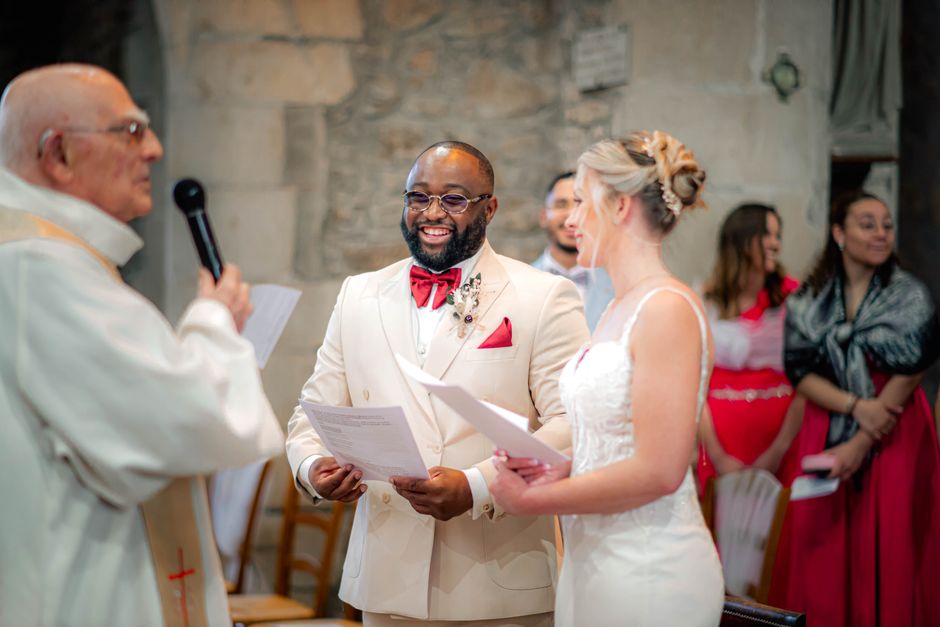
If you’ve never sat close enough to a wedding ceremony to notice the structure, it can feel like officiants are improvising the whole thing. They’re not — there’s a predictable shape almost every ceremony follows, even wildly different ones.
The 7 parts of what an officiant says
1. Welcome and opening remarks. You greet the guests, explain (briefly) why everyone’s gathered, and set the tone for what’s to come.
2. Reflection on the couple. A short passage about who this couple is and what makes their relationship worth celebrating — often includes how they met or a story from a friend.
3. Readings (optional). Poems, song lyrics, religious passages, or quotes the couple has chosen.
4. Declaration of intent. The formal “do you take this person” question, answered with “I do.” In most states, this is one of the legally required parts of the ceremony.
5. Vows. Either traditional (repeated after the officiant) or personal (written and read by each partner).
6. Ring exchange. A short piece of symbolic wording as the rings are placed on each other’s hands.
7. Pronouncement. The official “I now pronounce you married” moment — the other legally required line in most states.
What officiants do NOT need to say
You don’t need Shakespearean language, religious references (unless the couple wants them), or anything that doesn’t sound like you. The best ceremonies sound like a warm, articulate friend talking — not a script read off a page in a monotone.
A closer look at each section
Welcome and opening remarks. See our complete guide on writing a personalized welcome for structure and example language — this section is typically 2-3 minutes and sets the tone for everything that follows.
Reflection on the couple. Often the emotional centerpiece of what you say — see our guide on writing meaningful remarks about the couple for how to gather and structure this material.
Readings. If included, these are usually delivered by a friend or family member rather than the officiant — see our guide on choosing and coordinating ceremony readings.
Declaration of intent and vows. These two sections are sometimes treated as one continuous moment and sometimes kept distinct — see our guide on helping couples write their own vows if the couple wants support with this section specifically.
Ring exchange. A short, symbolic piece of wording — see our guide on ring exchange wording for eleven ready-to-use options across different tones.
Pronouncement. The closing legal and symbolic moment — see our guide on pronouncement wording examples for options ranging from classic to modern to funny.
Optional sections some ceremonies include
Beyond the seven core parts, some ceremonies add: a unity ritual (see our guide on writing a unity ceremony script), a blessing before the closing (see our guide on writing a wedding blessing), or a specific acknowledgment of family members or a deceased loved one (see our guide on honoring a deceased loved one). None of these are required — they’re additions couples choose based on what feels meaningful to them.
How much of this is actually memorized versus read
Most officiants don’t fully memorize all seven sections — reading from notes or a printed script during a ceremony is completely normal and expected by guests. See our guide on memorizing vs. reading your script for a practical middle-ground approach.
Don’t want to write this from scratch?
Our Ceremony Script Bundle has all seven sections fully written in six different styles, so you can pick and choose exactly what fits this couple.


Comments
Leave a comment