Who Signs the Marriage License and When?
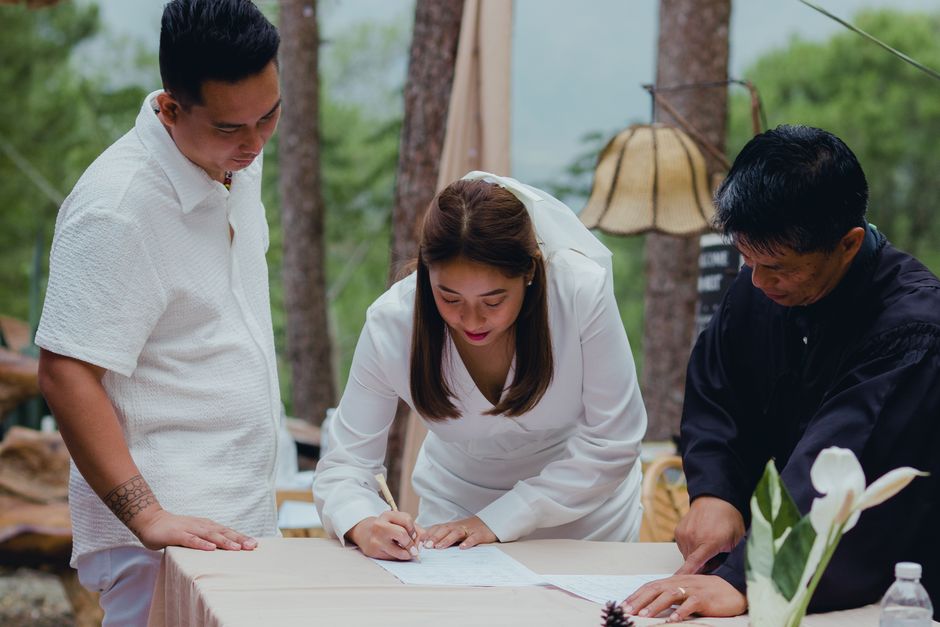
Marriage license paperwork trips up more first-time officiants than the ceremony itself. Here’s the process broken down clearly.
Who signs the marriage license
- The couple signs the license, typically when they apply for it (before the wedding) or at the ceremony itself, depending on state rules.
- The officiant signs to confirm they performed the ceremony and witnessed the couple’s declaration of intent.
- Witnesses — most states require one or two witnesses (often 18 or older) to also sign.
When the signing happens
The signing typically happens immediately after the pronouncement, while everyone is still gathered. Some officiants build a few minutes into the reception timeline specifically for this — it’s easy to forget once the celebration starts.
What to bring
- The physical marriage license (the couple should have picked this up in advance — it’s usually not mailed).
- A working pen (bring two, just in case).
- Your ordination proof, in case the county requests it.
After the signing: the part people forget
Once everyone has signed, someone has to physically return the license to the correct county office within a specific window — often 10-30 days depending on the state. This is sometimes the officiant’s job, sometimes the couple’s, so confirm ahead of time whose responsibility it is. Missing this deadline can mean the marriage isn’t officially registered, even though the ceremony happened.
Avoid the most common mistake
The single biggest officiant error is forgetting to confirm who’s responsible for filing the completed license. Put it on your calendar the moment the ceremony ends — don’t rely on memory during a day full of celebration.
Where the signing actually happens
The signing location varies — some venues have a designated signing table set up as part of the day’s flow; others expect it to happen informally right after the ceremony, before guests move to the reception area. Confirm with the couple or venue coordinator ahead of time so you’re not searching for a flat surface and quiet moment in the chaos immediately following the pronouncement.
What if a witness isn’t available right after the ceremony?
If your state requires witnesses (see our guide on how many witnesses you need) and the planned witness has stepped away, any adult present can typically step in — a guest, a photographer, or a venue staff member are all common last-minute options, assuming they’re comfortable signing.
Double-checking the paperwork before anyone leaves
Before the celebration fully takes over, take a moment to visually confirm the license is completely and correctly filled out — all required signatures present, correct date, no blank fields. Catching a missing signature in the moment is far easier to fix than discovering it days later, once everyone involved has scattered.
What happens if the deadline for returning the license is missed?
Consequences vary by state and county, but missing the filing window can mean delays in the marriage being officially registered — which can, in turn, delay things the couple needs proof of marriage for (a name change, adding a spouse to insurance, tax filing status). This is exactly why confirming responsibility for returning the license — and actually following through promptly — matters more than it might seem in the moment.
A simple way to make sure this doesn’t get missed
Whoever is responsible for returning the license, set a calendar reminder for the very next day (not “sometime this week”) — wedding-day energy and post-wedding logistics both make it easy to let this slip if it isn’t handled promptly.
Want a complete legal to-do list, not just this one piece? Our Checklist & Timeline Kit includes a full legal checklist plus a day-of run sheet with a dedicated line for exactly this.



Comments
Leave a comment