How to Coordinate With the Wedding Photographer as the Officiant

The officiant and the photographer end up working closely together during a wedding ceremony, even though they rarely think of themselves as a team. A little coordination between the two of you goes a long way toward making sure the photos turn out well and the ceremony runs smoothly.
Why this relationship matters more than it seems
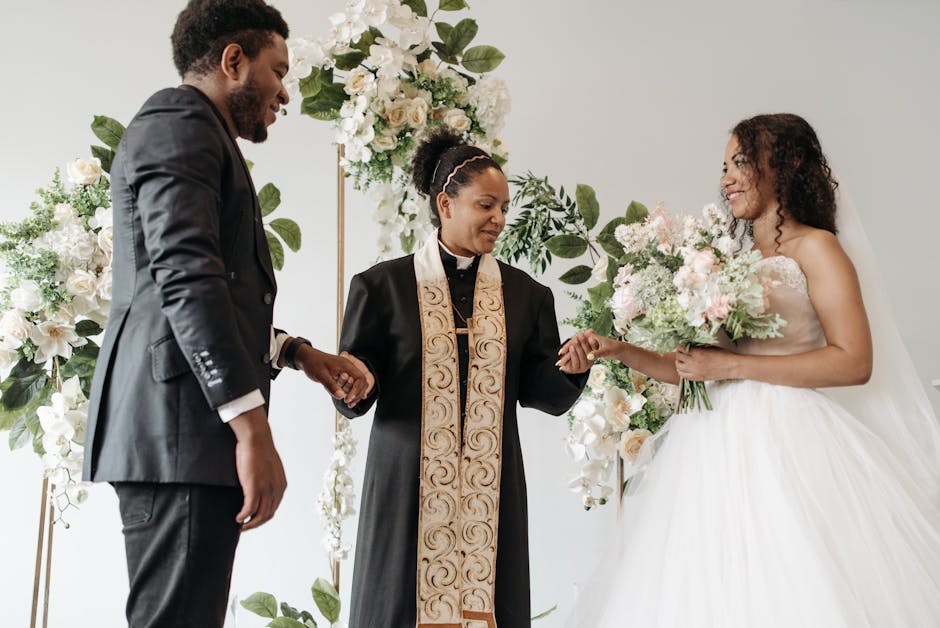
You and the photographer are both trying to capture and deliver the same moment — you through words, they through images. When you’re not coordinated, common problems include the officiant unintentionally blocking the couple’s faces from the primary camera angle, or the photographer being caught off guard by a key moment (like the ring exchange) because they didn’t know exactly when it was coming.
A simple pre-ceremony conversation
If possible, introduce yourself to the photographer before the ceremony starts and cover a few quick points:
Where will you be standing, and where will the couple be facing? This helps the photographer plan their primary shooting position relative to you.
When are the key visual moments? Flag the ring exchange, the first kiss, and any specific ritual (unity candle, sand ceremony, etc.) so the photographer can be ready rather than reacting after the fact.
Do you plan to move at all during the ceremony? If you’ll be stepping to the side for any reason, a heads-up prevents the photographer from being surprised by your position changing mid-shot.
Positioning yourself to avoid blocking shots
A few general positioning habits help:
- Stand slightly off to the side rather than directly between the couple and the main photographer position, when the ceremony structure allows it.
- Turn your body toward the couple, angling yourself so you’re not fully blocking either partner’s face from the primary camera angle.
- Be mindful during the ring exchange and kiss specifically — these are the most-photographed moments, and stepping back slightly (if the ceremony flow allows) gives the photographer a cleaner shot.
Timing cues that help photographers
Photographers appreciate small verbal or physical cues that signal an upcoming key moment, even subtle ones. Pausing briefly before saying “the rings, please” or “you may kiss” gives photographers a half-second to prepare, which often makes the difference between catching the perfect moment and missing it.
What to do if there’s no formal photographer conversation beforehand
Not every wedding allows time for a proper pre-ceremony conversation with the photographer, especially at smaller or more casual events. In that case, simply being aware of your positioning and pacing throughout the ceremony — moving deliberately rather than quickly, standing at a slight angle rather than dead center — helps even without direct coordination.
A note on videographers too
If the wedding also has a videographer, many of the same principles apply, with one addition: videographers often need clear audio, so if you’re using a microphone, confirm it’s working well for both photography lighting and video/audio purposes, since the two vendors sometimes have different technical needs.
Keep the couple’s experience central
While photo coordination matters, remember that your primary job is delivering a meaningful ceremony for the couple and guests — not performing for the camera. Good coordination with the photographer should feel like a quiet, background adjustment to your positioning and pacing, not something that visibly changes how you’re delivering the ceremony itself.
If there’s also a livestream for remote guests
Increasingly common alongside in-person photography — if guests are watching remotely, ask whether there’s a specific camera or angle you should also be mindful of, similar to the photographer conversation, so remote guests get a clear view of key moments too.


Comments
Leave a comment