Symbolic Wedding Ceremony With No Legal Paperwork

A symbolic wedding ceremony looks and feels exactly like a legal one — vows, rings, a pronouncement — but it carries no legal weight. The couple is either already legally married (often via a quiet courthouse visit beforehand) or will complete the legal paperwork separately. If you’ve been asked to officiate one of these, the good news is it’s actually simpler than a legally binding ceremony in a few specific ways.
Why couples choose this route
The most common reason is a destination wedding where the local country’s marriage laws are complicated, slow, or require residency — the couple marries legally at home first, then has the ceremony everyone attends as a symbolic celebration abroad. Other couples marry quietly at a courthouse for a visa deadline, insurance reasons, or tax timing, then plan a “real” ceremony for later once family can gather. Some simply prefer to keep the legal process and the celebration completely separate.
What’s different for the officiant
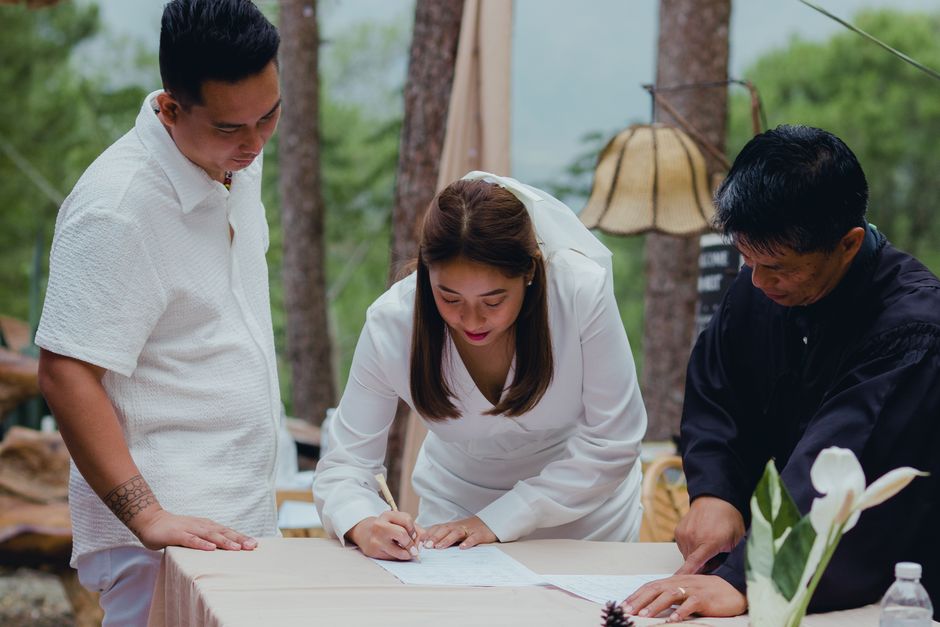
You don’t need to be legally ordained, since there’s no marriage license to sign or file. You don’t need to research state-specific officiant registration rules, since no government paperwork is involved. The one thing to get right: know in advance that this is a symbolic ceremony so you don’t accidentally reference a marriage license or ask the couple to sign anything during the ceremony — a small script mismatch that’s easy to avoid once you know the situation.
Writing the script for a symbolic ceremony
The script itself barely changes. You can still say “I now pronounce you married” — the couple genuinely is married, just via a separate legal step. The only wording to skip is anything that implies you’re the one making it official (“by the power vested in me by the state of ___”), since that legal authority isn’t relevant here. A simple swap: “By the love you’ve shown each other today, I now pronounce you married.”
Talking to the couple beforehand
Ask directly: “Has the legal marriage already happened, or will it happen separately?” and “Do you want me to reference that at all during the ceremony, or keep it private?” Some couples want a quiet acknowledgment (“as many of you know, [names] made this official last month — today is about all of you being here to celebrate it”), while others prefer no mention at all.
Common mistakes to avoid
Assuming every ceremony needs a marriage license. If the couple hasn’t mentioned one, ask early rather than assuming.
Accidentally including legal-authority language. Double-check your script for phrases like “by the power vested in me” if you’re not the one who will be filing anything.
Making it feel less “real.” A symbolic ceremony is just as meaningful to the couple and their guests — keep your energy and preparation exactly the same as you would for a legally binding one.


Comments
Leave a comment